


en
en v
Phone
Cart0 Tickets
Total: 0
Account
Calendar
Search
Menu
X

Iphigenia in Tauris

VenueTeatro dell´Opera di Roma Teatro Costanzi
CalendarSun 18 Apr 2027 - Tue 27 Apr 2027
Synopsis/Details

Synopsis

Benjamin West: Pylades and Orestes brought as victims to Iphigenia (1766), detail


Act 1

Scene: The entrance hall of the temple of Diana in Tauris.

There is no overture; the opera begins with a short passage evoking calm before turning into a depiction of a great storm at sea. Iphigenia, sister of Orestes, is the high priestess of Diana in the temple of Tauris, having been transported there magically by the goddess when her father Agamemnon attempted to offer her as a sacrifice. Iphigenia and her priestesses beg the gods to protect them from the storm (Grands dieux! soyez nous secourables).

Although the storm dies down, Iphigenia remains troubled by a dream she has had, in which she envisioned her mother Clytaemnestra murdering her father, then her brother Orestes killing her mother, and finally her own hand stabbing her brother. She prays to Diana to reunite her with Orestes (Ô toi qui prolongeas mes jours). Thoas, King of Tauris, enters. He too is obsessed with dark thoughts (De noirs pressentiments): the oracles, he tells her, predict doom for him if a single stranger escapes with his life. (The custom of the Scythians, who inhabit Tauris, is to ritually sacrifice any who are shipwrecked on their shores).

A chorus of Scythians comes bringing news of two young Greeks who have just been found shipwrecked, demanding their blood (Il nous fallait du sang). After Iphigenia and the priestesses depart, Thoas brings in the Greeks, who turn out to be Orestes and his friend Pylades. After asking them for what purpose they came (they have come to retrieve Diana's statue and return it to Greece, though they do not divulge this), Thoas promises them death and has them taken away.


Act 2

Scene: An inner chamber of the temple

Orestes and Pylades languish in chains. Orestes berates himself for causing the death of his dear friend (Dieux qui me poursuivez), but Pylades assures him that he does not feel dispirited because they will die united (Unis dès la plus tendre enfance). A minister of the sanctuary comes to remove Pylades. Orestes half falls asleep (Le calme rentre dans mon coeur), but he is tormented by visions of the Furies, who wish to avenge his slaying of his mother (whom Orestes killed for murdering his father Agamemnon).

Iphigenia enters and, although the two do not recognize each other, Orestes sees an astonishing likeness between her and the slain Clytaemnestra seen in his dream. She questions him further, asking him the fate of Agamemnon and all Greece, and he tells her of Agamemnon's murder by his wife, and the wife's murder by her son. In agitation, she asks of the fate of the son, and Orestes says that the son found the death he had long sought, and that only their sister Electra remains alive. Iphigenia sends Orestes away and with her priestesses laments the destruction of her country and the supposed death of her brother (Ô malheureuse Iphigénie). She and the priestesses perform a funeral ceremony for Orestes (Contemplez ces tristes apprêts).


Act 3

Scene: Iphigenia's chamber

Iphigenia is drawn to the stranger who reminds her of her brother Orestes (D'une image, hélas! trop chérie). She tells Orestes and Pylades she can persuade Thoas to save one of them from the sacrifice (Je pourrais du tyran tromper la barbarie) and asks the one who is spared to carry word of her fate to her sister Electra in Argos. Both men readily agree, and Iphigenia chooses Orestes to survive.

But on her exit, Orestes insists that Pylades agree to switch places with him as Orestes cannot bear the thought of his friend's death and sees dying as an escape from his own madness; Pylades, on the contrary, is glad at the thought of dying so Orestes can live (Duet: Et tu prétends encore que tu m'aimes and aria for Pylades: Ah! mon ami, j'implore ta pitié!). When Iphigenia returns, Orestes insists that she reverse her decision, threatening to kill himself before her eyes if she does not. Reluctantly, she agrees to spare Pylades instead and sends him to carry her message to Electra. Everyone but Pylades departs, and he closes the act by promising to do everything possible to save Orestes (Divinité des grandes âmes!).


Act 4

Scene: Inside the temple of Diana

Iphigenia wonders how she can ever carry out the killing of Orestes, since somehow her soul shrinks from the thought of it. She asks the goddess Diana to help her steel herself for the task (Je t'implore et je tremble). The priestesses bring in Orestes, who has been prepared for sacrifice (Chorus: Ô Diane, sois nous propice). He tells her not to lament him, but to strike, telling her it is the will of the gods. The priestesses sing a hymn to Diana as they lead Orestes to the altar (Chorus: Chaste fille de Latone). While she wields the knife, Orestes exclaims Iphigenia's name, leading her and the priestesses to recognize him and stop the ritual slaughter.

The happy reunion of sister and brother is cut short at news that Thoas is coming, having heard that one of the captives was released and intent on the blood of the other. The king enters wildly, ordering his guards to seize Orestes and promising to sacrifice both him and his sister. At that moment Pylades enters with a band of Greeks, cutting down Thoas where he stands.

The resulting rout of the Scythians by the Greeks is halted by a dea ex machina appearance of Diana, who commands the Scythians to restore her statue to Greece (Arrêtez! Écoutez mes décrets éternels). She also issues pardon to Orestes for murdering his mother, sending him to be king over Mycenae and bidding him restore Iphigenia to her country. As Diana is carried back into the clouds, everyone sings a concluding chorus of rejoicing at having the favor of earth and heaven restored to them (Les dieux, longtemps en courroux).

Cast

Music by Christoph Willibald Gluck

Tragédie lyrique in four acts
Libretto by Nicolas-François Guillard

In the original language with Italian and English surtitles


DIRECTOR: Alessandro De Marchi

DIRECTION: Robert Carsen


Choir Master: Ciro Visco

Sets and Costumes: Tobias Hoheisel

Choreography: Philippe Giraudeau

Lights: Robert Carsen and Peter Van Praet


CHARACTERS AND PERFORMERS

Iphigénie: Axelle Fanyo

Oreste: Alessio Arduini

Pylade: Julien Behr

Thoas: Jean-Fernand Setti


Orchestra and Chorus of the Rome Opera House

New production by the Rome Opera House.
Production by the Théâtre des Champs-Elysées, Paris.

Venue
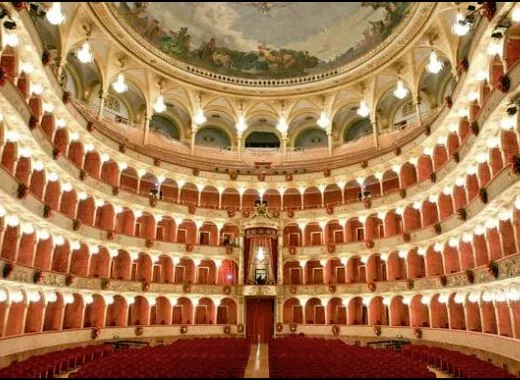
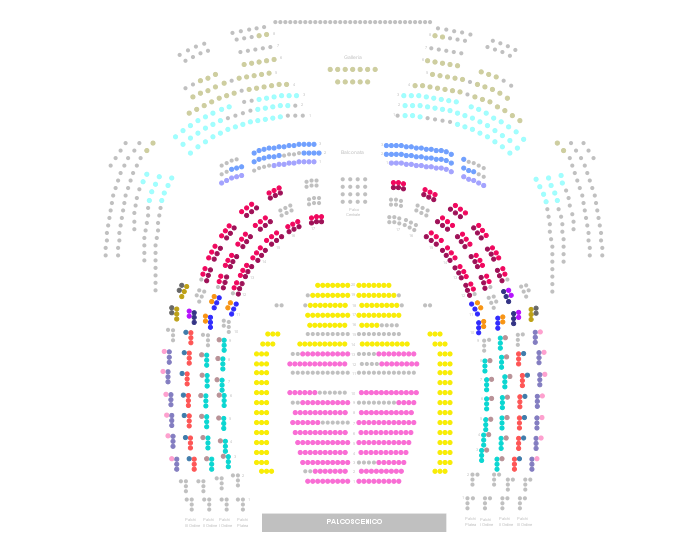
Teatro dell´Opera di Roma Teatro Costanzi

A new way to discover the finest details in different opera houses, theatres one can explore from home in advance through the revolutionary GOOGLE PERFORMING ARTS PROJECT. CLICK ON THE LINK TO SEE THE THEATER.


The Teatro dell'Opera, from its building (1879), at Domenico Costanzi’s request (1810-1898), and 1926, when it was bought by the then Governor of RomE, bore the name of Domenico Costanzi, building contractor and impresario, who committed the building to the Milanese architect Achille Sfondrini (1836-1900), specialized in theatre building and renovation. Built in 18 months on the area prevIously occupied by Heliogabalus’ villa, it was inaugurated on November 27th, 1880 with Semiramide by G. Rossini, conducted by the Maestro Giovanni Rossi, in the presence of the King and Queen of Italy.


Sfrondini’s design privileges the acoustic effect, by conceiving the interior structure as a "resonance chamber": as is particularly evident from the horseshoe shape. At the beginning, the theatre, with a seating capacity of 2,212 spectators, had three tiers of boxes, an amphitheatre, a gallery. All was surmounted by a dome with splendid frescoes by Annibale Brugnoli.


Costanzi invested all his personal assets in the venture. However, due to the despotic refusal of the City Council to redeem the theatre, Costanzi was obliged to manage it himself. Despite the fact that he had to deal with huge financial problems, under his management the opera house held many world premières of such operas as Cavalleria Rusticana (on May 17th, 1890) and L'Amico Fritz(October 31st 1891), both by Pietro Mascagni, who then became very well known.


For a brief period, the theatre was managed by the founder's son, Enrico Costanzi, who contributed to other great premières: Tosca by Giacomo Puccini (January 14th, 1900) and Le Maschere (January 17th, 1901). In 1907, the Teatro Costanzi was managed by the impresario Walter Mocchi (1870-1955) on behalf of the Società Teatrale Internazionale e Nazionale (STIN).


In 1912 Emma Carelli (1877-1928), Mocchi's wife, became the managing director of the new «Impresa Costanzi», named as such following various changes in the company structure. With Rome City Council’s purchase of Costanzi company, the theatre became “Teatro Reale dell'Opera” and a partial rebuilding was commissioned to the architect Marcello Piacentini. Closed on November 15th, 1926, it was re-opened on February 27th, 1928 with the opera Nerone by Arrigo Boito, conducted by the Maestro Gino Marinuzzi.


With the advent of the Republic, the theatre gained the current name of Teatro dell'Opera. In 1958, the building was further remodeled and modernised at the request of the Rome City Council. In over a century, the Teatro dell’Opera has seen its prestige increase internationally. During the several seasons, the most acclaimed voices worldwide followed one another: Enrico Caruso; Beniamino Gigli; Aureliano Pertile; Giacomo Lauri-Volpi; Claudia Muzio; Maria Caniglia; Maria Callas; Renata Tebaldi; Montserrat Caballé; Marilyn Horne; Raina Kabaivanska; Mario Del Monaco; Franco Corelli; Giuseppe Di Stefano; Tito Gobbi; Alfredo Kraus; Ruggero Raimondi; José Carreras; Placido Domingo and Luciano Pavarotti. Among the finest conductors, we can mention Otto Klemperer, Arturo Toscanini, Victor De Sabata, Marinuzzi,Vittorio Gui, Tullio Serafin, Von Karajan, Gianandrea Gavazzeni, Carlo Maria Giulini, Georg Solti, Claudio Abbado, Georges Prêtre, Zubin Mehta, Lorin Maazel, Mstislav Rostropovich, Giuseppe Patanè, Giuseppe Sinopoli, Wolfgang Sawallisch, Nino Sanzogno, Gianluigi Gelmetti and since 2008 the Maestro Riccardo Muti.


How to reach Teatro dell'Opera

Piazza Beniamino Gigli, 7


METRO
Linea A -  REPUBBLICA TEATRO DELL'OPERA stop

BUS
Via Nazionale - H, 40, 60, 64, 70, 71, 170, 116T
Via Depretis - 70, 71
Via Cavour - 16, 75, 84, 150 (festivo), 360, 590, 649, 714
Stazione Termini - 16, 38, 75, 86, 90, 217, 310, 360, 649, 714

TAXI
phone number  - 06.3570

Hotels and Accomodation Nearby

Buy now

Gift vouchers

Gift someone an unforgettable night at the opera.
Choose a gift coupon and let them pick the performance they love—music, drama, and world-class artistry, all in one elegant experience.
Official Tickets for Rome Opera Theater, Italy, Concerts, Museums, etc.
Instagram
Payment
Ticket Search
Google Play
App Store
© 2026 RM EUROPA TICKET GmbH
Whatsapp