 en
en 
 de
de it
it fr
fr es
es ru
ru jp
jp ro
ro








 Teatro dell´Opera di Roma Teatro Costanzi
 Thu 04 Feb 2027 - Wed 10 Feb 2027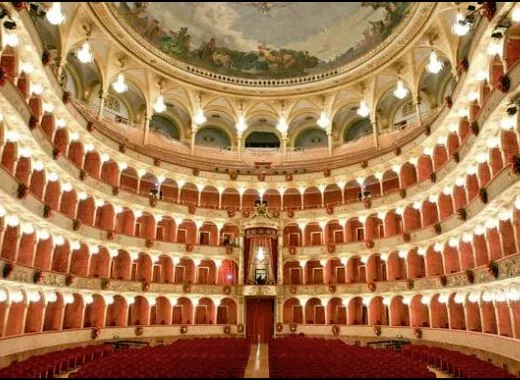
A new way to discover the finest details in different opera houses, theatres one can explore from home in advance through the revolutionary GOOGLE PERFORMING ARTS PROJECT. CLICK ON THE LINK TO SEE THE THEATER.
The Teatro dell'Opera, from its building (1879), at Domenico Costanzi’s request (1810-1898), and 1926, when it was bought by the then Governor of RomE, bore the name of Domenico Costanzi, building contractor and impresario, who committed the building to the Milanese architect Achille Sfondrini (1836-1900), specialized in theatre building and renovation. Built in 18 months on the area prevIously occupied by Heliogabalus’ villa, it was inaugurated on November 27th, 1880 with Semiramide by G. Rossini, conducted by the Maestro Giovanni Rossi, in the presence of the King and Queen of Italy.
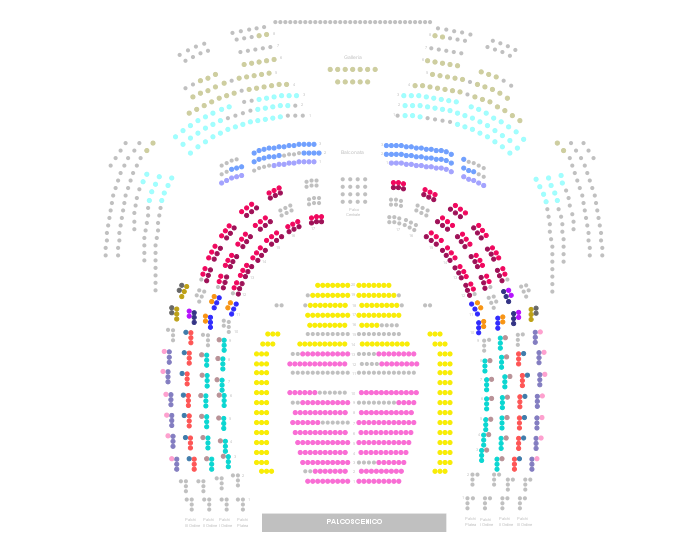
Sfrondini’s design privileges the acoustic effect, by conceiving the interior structure as a "resonance chamber": as is particularly evident from the horseshoe shape. At the beginning, the theatre, with a seating capacity of 2,212 spectators, had three tiers of boxes, an amphitheatre, a gallery. All was surmounted by a dome with splendid frescoes by Annibale Brugnoli.
Costanzi invested all his personal assets in the venture. However, due to the despotic refusal of the City Council to redeem the theatre, Costanzi was obliged to manage it himself. Despite the fact that he had to deal with huge financial problems, under his management the opera house held many world premières of such operas as Cavalleria Rusticana (on May 17th, 1890) and L'Amico Fritz(October 31st 1891), both by Pietro Mascagni, who then became very well known.
For a brief period, the theatre was managed by the founder's son, Enrico Costanzi, who contributed to other great premières: Tosca by Giacomo Puccini (January 14th, 1900) and Le Maschere (January 17th, 1901). In 1907, the Teatro Costanzi was managed by the impresario Walter Mocchi (1870-1955) on behalf of the Società Teatrale Internazionale e Nazionale (STIN).
In 1912 Emma Carelli (1877-1928), Mocchi's wife, became the managing director of the new «Impresa Costanzi», named as such following various changes in the company structure. With Rome City Council’s purchase of Costanzi company, the theatre became “Teatro Reale dell'Opera” and a partial rebuilding was commissioned to the architect Marcello Piacentini. Closed on November 15th, 1926, it was re-opened on February 27th, 1928 with the opera Nerone by Arrigo Boito, conducted by the Maestro Gino Marinuzzi.
With the advent of the Republic, the theatre gained the current name of Teatro dell'Opera. In 1958, the building was further remodeled and modernised at the request of the Rome City Council. In over a century, the Teatro dell’Opera has seen its prestige increase internationally. During the several seasons, the most acclaimed voices worldwide followed one another: Enrico Caruso; Beniamino Gigli; Aureliano Pertile; Giacomo Lauri-Volpi; Claudia Muzio; Maria Caniglia; Maria Callas; Renata Tebaldi; Montserrat Caballé; Marilyn Horne; Raina Kabaivanska; Mario Del Monaco; Franco Corelli; Giuseppe Di Stefano; Tito Gobbi; Alfredo Kraus; Ruggero Raimondi; José Carreras; Placido Domingo and Luciano Pavarotti. Among the finest conductors, we can mention Otto Klemperer, Arturo Toscanini, Victor De Sabata, Marinuzzi,Vittorio Gui, Tullio Serafin, Von Karajan, Gianandrea Gavazzeni, Carlo Maria Giulini, Georg Solti, Claudio Abbado, Georges Prêtre, Zubin Mehta, Lorin Maazel, Mstislav Rostropovich, Giuseppe Patanè, Giuseppe Sinopoli, Wolfgang Sawallisch, Nino Sanzogno, Gianluigi Gelmetti and since 2008 the Maestro Riccardo Muti.
How to reach Teatro dell'Opera
Piazza Beniamino Gigli, 7
METRO
Linea A - REPUBBLICA TEATRO DELL'OPERA stop
BUS
Via Nazionale - H, 40, 60, 64, 70, 71, 170, 116T
Via Depretis - 70, 71
Via Cavour - 16, 75, 84, 150 (festivo), 360, 590, 649, 714
Stazione Termini - 16, 38, 75, 86, 90, 217, 310, 360, 649, 714
TAXI
phone number - 06.3570



 RM EUROPA TICKET GmbH
 Call now
 Book now