


en
en v
Phone
Cart0 Tickets
Total: 0
Account
Calendar
Search
Menu
X

Raymonda

VenueTeatro dell´Opera di Roma Teatro Costanzi
CalendarWed 06 Oct 2027 - Wed 13 Oct 2027
Synopsis/Details

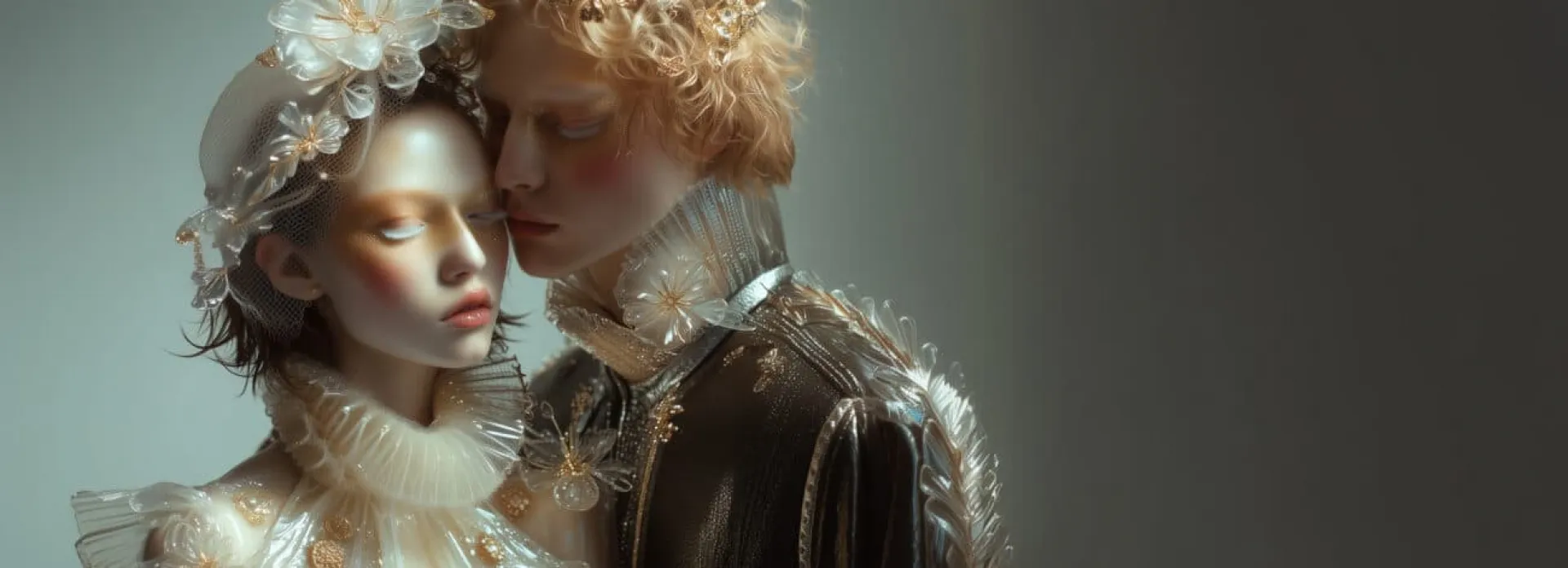
Raymonda | Ballet in three acts
New production by the Rome Opera House


Synopsis


Act I

Scene 1: Raymonda's feast

At the castle of Doris, preparations are under way for the celebrations of the young countess Raymonda's name day. Countess Sybille, her aunt, chides those who are present, including Raymonda's two friends Henrietta and Clémence, and the two troubadours Béranger and Bernard, for their idleness and their passion for dancing, telling them of the legendary White Lady, the protector of the castle, who warns the Doris household every time one of its members is in danger and casts punishment on those who do not fulfil their duties. The young people laugh at the countess's superstitions and continue to celebrate. The seneschal of the Doris castle announces the arrival of a messenger, sent by Raymonda's fiancé, the noble crusader knight, Jean de Brienne, bearing a letter for his beloved. Raymonda rejoices when she reads that King Andrew II of Hungary, for whom Jean de Brienne has fought, is returning home in triumph and Jean de Brienne will arrive at the Doris castle the next day for their wedding. Suddenly, the celebrations are interrupted when the seneschal announces the arrival of an uninvited Saracen knight, Abderakhman and his entourage, who have stopped at the castle seeking shelter for the night. Captivated by Raymonda's beauty, Abderakhman falls in love with her at once and resolves to do anything to win her. The party lasts late into the night and, left alone and exhausted by the day, Raymonda lies down on a couch and falls asleep. As she sleeps, she begins to dream that the White Lady appears illuminated by the moonlight and, with an imperious gesture, orders Raymonda to follow her.


Scene 2: The Visions

The White Lady, without making a sound, advances along the terrace. Raymonda follows her in a state of unconsciousness. At a signal from the White Lady, the garden is wrapped in mist. A moment later, the mist vanishes and Jean de Brienne appears. Overjoyed, Raymonda runs into his arms and they are surrounded by glory, knights and celestial maidens. The garden is illuminated by a fantastic light and Raymonda expresses her joy to the White Lady, who interrupts her enthusiasm with a vision of what awaits her. Raymonda wants to return to her fiancé, but instead, she finds Abderakhman, who has taken Jean de Brienne's place. Abderakhman declares his passionate love for her, but Raymonda, though confused and upset, is quick to reject him. Imps and elves appear from everywhere surrounding Raymonda, who begs the White Lady to save her and Abderakhman tries to take Raymonda by force. Raymonda cries out and falls to the ground in a faint. The frightful vision disappears along with the White Lady.


Act II

The Courtyard of the Castle

The feast in honour of Jean de Brienne's arrival is taking place. Raymonda welcomes her guests, but cannot hide her uneasiness caused by Jean de Brienne's delay. Abderakhman approaches her repeatedly and reveals his passion for her, but remembering the warnings of the White Lady, Raymonda rejects him with contempt. Abderakhman becomes even more insistent and realises the only way to possess Raymonda is by force. He calls his slaves to dance for her, after which he summons his cup bearers and they pour a potion into everyone's cup, causing all the guests to become drunk. Seizing his chance, Abderakhman grabs Raymonda in an attempt to abduct her, but luckily Jean de Brienne arrives just in time, accompanied by King Andrew II and his knights. Jean de Brienne saves Raymonda from the hands of the Saracens and tries to seize Abderakhman. The King commands the two rivals to put an end to the matter in a duel, during which the White Lady appears on the castle tower. Abderakhman is dazed and dies, slain by Jean de Brienne's sword. Raymonda joyfully embraces her fiancé and the two reaffirm their love as the King joins their hands.


Act III

The Wedding

Raymonda and Jean de Brienne are finally married and King Andrew II of Hungary gives the newly wedded couple his blessing. In his honour, everyone at court is dressed in Hungarian fashion and perform a range of Hungarian-style dances, ending in an Apotheosis where everyone comes together in a knightly tournament.


Cast

Conductor: Nicolas André
Choreography: Jean-Guillaume Bart


Choreography Assistant: Laura Contardi
Set Design: Bruno de Lavenère
Costumes: Anna Biagiotti
Lighting: François Menou


Orchestra, Principal Dancers, First Soloists, Soloists and Corps de Ballet of the Rome Opera House
With the participation of the Dance School of the Rome Opera House


New production by the Rome Opera House

Venue
Teatro dell´Opera di Roma Teatro Costanzi

A new way to discover the finest details in different opera houses, theatres one can explore from home in advance through the revolutionary GOOGLE PERFORMING ARTS PROJECT. CLICK ON THE LINK TO SEE THE THEATER.


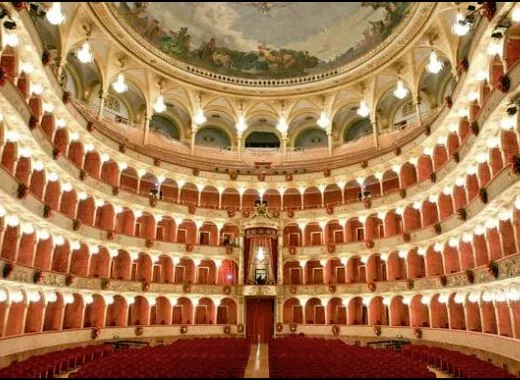
The Teatro dell'Opera, from its building (1879), at Domenico Costanzi’s request (1810-1898), and 1926, when it was bought by the then Governor of RomE, bore the name of Domenico Costanzi, building contractor and impresario, who committed the building to the Milanese architect Achille Sfondrini (1836-1900), specialized in theatre building and renovation. Built in 18 months on the area prevIously occupied by Heliogabalus’ villa, it was inaugurated on November 27th, 1880 with Semiramide by G. Rossini, conducted by the Maestro Giovanni Rossi, in the presence of the King and Queen of Italy.


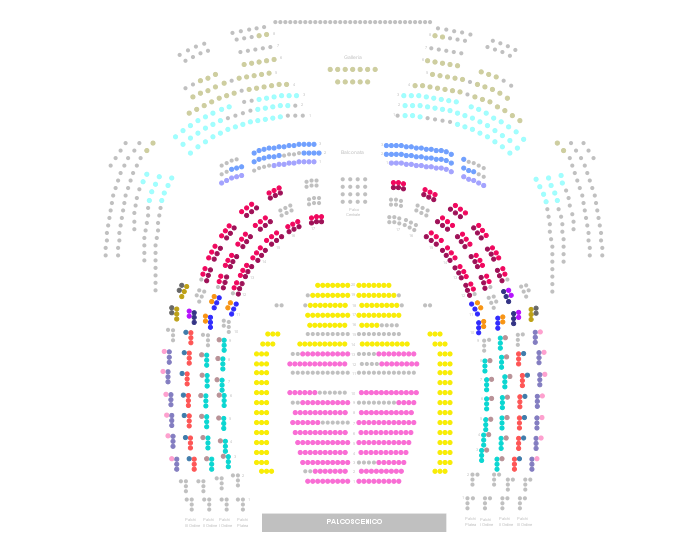
Sfrondini’s design privileges the acoustic effect, by conceiving the interior structure as a "resonance chamber": as is particularly evident from the horseshoe shape. At the beginning, the theatre, with a seating capacity of 2,212 spectators, had three tiers of boxes, an amphitheatre, a gallery. All was surmounted by a dome with splendid frescoes by Annibale Brugnoli.


Costanzi invested all his personal assets in the venture. However, due to the despotic refusal of the City Council to redeem the theatre, Costanzi was obliged to manage it himself. Despite the fact that he had to deal with huge financial problems, under his management the opera house held many world premières of such operas as Cavalleria Rusticana (on May 17th, 1890) and L'Amico Fritz(October 31st 1891), both by Pietro Mascagni, who then became very well known.


For a brief period, the theatre was managed by the founder's son, Enrico Costanzi, who contributed to other great premières: Tosca by Giacomo Puccini (January 14th, 1900) and Le Maschere (January 17th, 1901). In 1907, the Teatro Costanzi was managed by the impresario Walter Mocchi (1870-1955) on behalf of the Società Teatrale Internazionale e Nazionale (STIN).


In 1912 Emma Carelli (1877-1928), Mocchi's wife, became the managing director of the new «Impresa Costanzi», named as such following various changes in the company structure. With Rome City Council’s purchase of Costanzi company, the theatre became “Teatro Reale dell'Opera” and a partial rebuilding was commissioned to the architect Marcello Piacentini. Closed on November 15th, 1926, it was re-opened on February 27th, 1928 with the opera Nerone by Arrigo Boito, conducted by the Maestro Gino Marinuzzi.


With the advent of the Republic, the theatre gained the current name of Teatro dell'Opera. In 1958, the building was further remodeled and modernised at the request of the Rome City Council. In over a century, the Teatro dell’Opera has seen its prestige increase internationally. During the several seasons, the most acclaimed voices worldwide followed one another: Enrico Caruso; Beniamino Gigli; Aureliano Pertile; Giacomo Lauri-Volpi; Claudia Muzio; Maria Caniglia; Maria Callas; Renata Tebaldi; Montserrat Caballé; Marilyn Horne; Raina Kabaivanska; Mario Del Monaco; Franco Corelli; Giuseppe Di Stefano; Tito Gobbi; Alfredo Kraus; Ruggero Raimondi; José Carreras; Placido Domingo and Luciano Pavarotti. Among the finest conductors, we can mention Otto Klemperer, Arturo Toscanini, Victor De Sabata, Marinuzzi,Vittorio Gui, Tullio Serafin, Von Karajan, Gianandrea Gavazzeni, Carlo Maria Giulini, Georg Solti, Claudio Abbado, Georges Prêtre, Zubin Mehta, Lorin Maazel, Mstislav Rostropovich, Giuseppe Patanè, Giuseppe Sinopoli, Wolfgang Sawallisch, Nino Sanzogno, Gianluigi Gelmetti and since 2008 the Maestro Riccardo Muti.


How to reach Teatro dell'Opera

Piazza Beniamino Gigli, 7


METRO
Linea A -  REPUBBLICA TEATRO DELL'OPERA stop

BUS
Via Nazionale - H, 40, 60, 64, 70, 71, 170, 116T
Via Depretis - 70, 71
Via Cavour - 16, 75, 84, 150 (festivo), 360, 590, 649, 714
Stazione Termini - 16, 38, 75, 86, 90, 217, 310, 360, 649, 714

TAXI
phone number  - 06.3570

Hotels and Accomodation Nearby

Buy now

Gift vouchers

Gift someone an unforgettable night at the opera.
Choose a gift coupon and let them pick the performance they love—music, drama, and world-class artistry, all in one elegant experience.
Official Tickets for Rome Opera Theater, Italy, Concerts, Museums, etc.
Instagram
Payment
 
Google Play
App Store
© 2026 RM EUROPA TICKET GmbH
Whatsapp