


en
en v
Phone
Cart0 Tickets
Total: 0
Account
Calendar
Search
Menu
X

The Barber of Seville

VenueTeatro dell´Opera di Roma Teatro Costanzi
CalendarThu 27 May 2027
Synopsis/Details

Synopsis

    Place: Seville, Spain
    Time: 18th century


Act 1

The square in front of Bartolo's house

In a public square outside Bartolo's house a band of musicians and a poor student named Lindoro are serenading, to no avail, the window of Rosina ("Ecco, ridente in cielo"; "There, laughing in the sky"). Lindoro, who is really the young Count Almaviva in disguise, hopes to make the beautiful Rosina love him for himself—not his money. Almaviva pays off the musicians who then depart, leaving him to brood alone. Rosina is the young ward of the grumpy, elderly Bartolo and she is allowed very little freedom because Bartolo plans to marry her, and her not inconsiderable dowry, himself – once she is of age.

Figaro approaches singing (Aria: "Largo al factotum della città"; "Make way for the factotum of the city"). Since Figaro used to be a servant of the Count, the Count asks him for assistance in helping him meet Rosina, offering him money should he be successful in arranging this. (Duet: "All'idea di quel metallo"; "At the idea of that metal"). Figaro advises the Count to disguise himself as a drunken soldier, ordered to be billeted with Bartolo, so as to gain entrance to the house. For this suggestion, Figaro is richly rewarded.

A room in Bartolo's house with four doors

The scene begins with Rosina's cavatina, "Una voce poco fa" ("A voice a little while ago"). (This aria was originally written in the key of E major, but it is sometimes transposed a semitone up into F major for coloratura sopranos to perform, giving them the chance to sing extra, almost traditional, cadenzas, sometimes reaching high Ds or even Fs.)


Knowing the Count only as Lindoro, Rosina writes to him. As she is leaving the room, Bartolo and Basilio enter. Bartolo is suspicious of the Count, and Basilio advises that he be put out of the way by creating false rumours about him (this aria, "La calunnia è un venticello" – "Calumny is a little breeze" – is almost always sung a tone lower than the original D major).

When the two have gone, Rosina and Figaro enter. Figaro asks Rosina to write a few encouraging words to Lindoro, which she has actually already written. (Duet: "Dunque io son...tu non m'inganni?"; "Then I'm the one...you're not fooling me?"). Although surprised by Bartolo, Rosina manages to fool him, but he remains suspicious. (Aria: "A un dottor della mia sorte"; "To a doctor of my class").

As Berta, the Bartolo housekeeper, attempts to leave the house, she is met by the Count disguised as an intoxicated soldier. In fear of the drunken man, she rushes to Bartolo for protection and he tries to remove the supposed soldier, but does not succeed. The Count manages to have a quick word with Rosina, whispering that he is Lindoro and passing her a letter. The watching Bartolo is suspicious and demands to know what is in the piece of paper in Rosina's hands, but she fools him by handing over her laundry list. Bartolo and the Count start arguing and, when Basilio, Figaro and Berta appear, the noise attracts the attention of the Officer of the Watch and his men. Bartolo believes that the Count has been arrested, but Almaviva only has to whisper his name to the officer and is released right away. Bartolo and Basilio are astounded, and Rosina makes fun of them. (Finale: "Fredda ed immobile, come una statua"; "Cold and still, just like a statue").


Act 2

A room in Bartolo's house with a piano

Almaviva again appears at the doctor's house, this time disguised as a singing tutor and pretending to act as substitute for the supposedly ailing Basilio, Rosina's regular singing teacher. Initially, Bartolo is suspicious, but does allow Almaviva to enter when the Count gives him Rosina's letter. He describes his plan to discredit Lindoro whom he believes to be one of the Count's servants, intent on pursuing women for his master. Figaro arrives to shave Bartolo. Bartolo demurs, but Figaro makes such a scene he agrees, but in order not to leave the supposed music master alone with Rosina, the doctor has Figaro shave him right there in the music room. When Basilio suddenly appears, he is bribed by a full purse from Almaviva and persuaded to leave again, with much discussion of how ill he looks. (Quintet: "Don Basilio! – Cosa veggo!"; "Don Basilio! – What do I see?"). Figaro begins to shave Bartolo, but Bartolo overhears the lovers conspiring. He drives everybody away.

The scene returns to the location of act 1 with a grill looking out onto the square. Bartolo orders Basilio to have the notary ready to marry him to Rosina that evening. He also explains his plot to come between the lovers. Basilio leaves and Rosina arrives. Bartolo shows Rosina the letter she wrote to "Lindoro", and persuades her that this is evidence that Lindoro is merely a flunky of Almaviva. Rosina believes him and agrees to marry him.

The stage remains empty while the music creates a thunder storm to indicate the passage of time. The Count and Figaro climb up a ladder to the balcony and enter the room through a window. Rosina shows Almaviva the letter and expresses her feelings of betrayal and heartbreak. Almaviva reveals his identity and the two reconcile. While Almaviva and Rosina are enraptured by one another, Figaro keeps urging them to leave. Two people are heard approaching the front door, who later turn out to be Basilio and the notary. However, when the Count, Rosina, and Figaro attempt to leave by way of the ladder, they discover it has been removed. The Count quickly gives Basilio the choice of accepting a bribe and being a witness to his marriage or receiving two bullets in the head (an easy choice, Basilio says). He and Figaro witness the signatures to a marriage contract between the Count and Rosina. Bartolo barges in, but is too late. The befuddled Bartolo (who was the one who had removed the ladder) is pacified by being allowed to retain Rosina's dowry.

Cast

Opera in Concert

DIRECTOR: Gianluca Capuano


Rosina: Cecilia Bartoli


Chorus of the Rome Opera House
Les musiciens du Prince – Monaco


On the occasion of the 40th anniversary of Cecilia Bartoli's career since her debut in Rome with The Barber of Seville

Venue
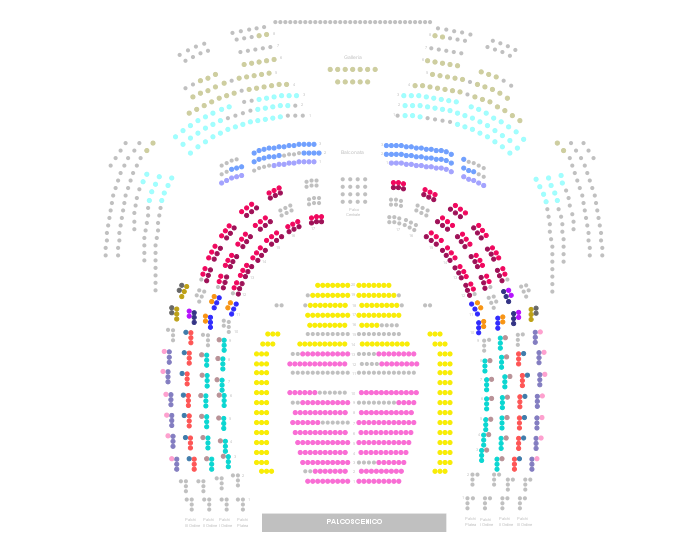
Teatro dell´Opera di Roma Teatro Costanzi

A new way to discover the finest details in different opera houses, theatres one can explore from home in advance through the revolutionary GOOGLE PERFORMING ARTS PROJECT. CLICK ON THE LINK TO SEE THE THEATER.


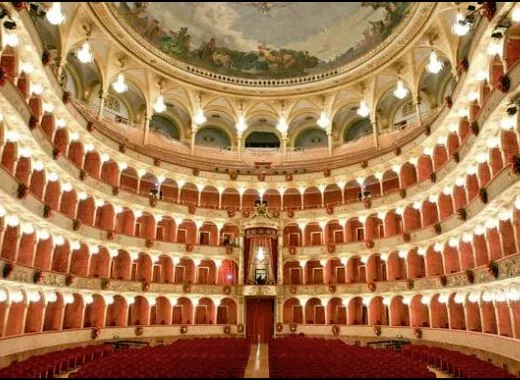
The Teatro dell'Opera, from its building (1879), at Domenico Costanzi’s request (1810-1898), and 1926, when it was bought by the then Governor of RomE, bore the name of Domenico Costanzi, building contractor and impresario, who committed the building to the Milanese architect Achille Sfondrini (1836-1900), specialized in theatre building and renovation. Built in 18 months on the area prevIously occupied by Heliogabalus’ villa, it was inaugurated on November 27th, 1880 with Semiramide by G. Rossini, conducted by the Maestro Giovanni Rossi, in the presence of the King and Queen of Italy.


Sfrondini’s design privileges the acoustic effect, by conceiving the interior structure as a "resonance chamber": as is particularly evident from the horseshoe shape. At the beginning, the theatre, with a seating capacity of 2,212 spectators, had three tiers of boxes, an amphitheatre, a gallery. All was surmounted by a dome with splendid frescoes by Annibale Brugnoli.


Costanzi invested all his personal assets in the venture. However, due to the despotic refusal of the City Council to redeem the theatre, Costanzi was obliged to manage it himself. Despite the fact that he had to deal with huge financial problems, under his management the opera house held many world premières of such operas as Cavalleria Rusticana (on May 17th, 1890) and L'Amico Fritz(October 31st 1891), both by Pietro Mascagni, who then became very well known.


For a brief period, the theatre was managed by the founder's son, Enrico Costanzi, who contributed to other great premières: Tosca by Giacomo Puccini (January 14th, 1900) and Le Maschere (January 17th, 1901). In 1907, the Teatro Costanzi was managed by the impresario Walter Mocchi (1870-1955) on behalf of the Società Teatrale Internazionale e Nazionale (STIN).


In 1912 Emma Carelli (1877-1928), Mocchi's wife, became the managing director of the new «Impresa Costanzi», named as such following various changes in the company structure. With Rome City Council’s purchase of Costanzi company, the theatre became “Teatro Reale dell'Opera” and a partial rebuilding was commissioned to the architect Marcello Piacentini. Closed on November 15th, 1926, it was re-opened on February 27th, 1928 with the opera Nerone by Arrigo Boito, conducted by the Maestro Gino Marinuzzi.


With the advent of the Republic, the theatre gained the current name of Teatro dell'Opera. In 1958, the building was further remodeled and modernised at the request of the Rome City Council. In over a century, the Teatro dell’Opera has seen its prestige increase internationally. During the several seasons, the most acclaimed voices worldwide followed one another: Enrico Caruso; Beniamino Gigli; Aureliano Pertile; Giacomo Lauri-Volpi; Claudia Muzio; Maria Caniglia; Maria Callas; Renata Tebaldi; Montserrat Caballé; Marilyn Horne; Raina Kabaivanska; Mario Del Monaco; Franco Corelli; Giuseppe Di Stefano; Tito Gobbi; Alfredo Kraus; Ruggero Raimondi; José Carreras; Placido Domingo and Luciano Pavarotti. Among the finest conductors, we can mention Otto Klemperer, Arturo Toscanini, Victor De Sabata, Marinuzzi,Vittorio Gui, Tullio Serafin, Von Karajan, Gianandrea Gavazzeni, Carlo Maria Giulini, Georg Solti, Claudio Abbado, Georges Prêtre, Zubin Mehta, Lorin Maazel, Mstislav Rostropovich, Giuseppe Patanè, Giuseppe Sinopoli, Wolfgang Sawallisch, Nino Sanzogno, Gianluigi Gelmetti and since 2008 the Maestro Riccardo Muti.


How to reach Teatro dell'Opera

Piazza Beniamino Gigli, 7


METRO
Linea A -  REPUBBLICA TEATRO DELL'OPERA stop

BUS
Via Nazionale - H, 40, 60, 64, 70, 71, 170, 116T
Via Depretis - 70, 71
Via Cavour - 16, 75, 84, 150 (festivo), 360, 590, 649, 714
Stazione Termini - 16, 38, 75, 86, 90, 217, 310, 360, 649, 714

TAXI
phone number  - 06.3570

Hotels and Accomodation Nearby

Buy now

Gift vouchers

Gift someone an unforgettable night at the opera.
Choose a gift coupon and let them pick the performance they love—music, drama, and world-class artistry, all in one elegant experience.
Official Tickets for Rome Opera Theater, Italy, Concerts, Museums, etc.
Instagram
Payment
 
Google Play
App Store
© 2026 RM EUROPA TICKET GmbH
Whatsapp