


en
en v
Phone
Cart0 Tickets
Total: 0
Account
Calendar
Search
Menu
X

The Swallow

VenueTeatro dell´Opera di Roma Teatro Costanzi
CalendarSat 18 Sep 2027 - Sun 26 Sep 2027
Synopsis/Details

The Swallow
Music by Giacomo Puccini
Lyric comedy in three acts
Libretto by Giuseppe Adami
New production by the Rome Opera House
With surtitles in Italian and English


Synopsis

Place: Paris and the French Riviera.

Time: Mid-19th century.


Act 1

Magda's salon, Paris

At a cocktail party hosted by the courtesan Magda, the poet Prunier expounds his theories on love. Magda's friends Yvette, Bianca and Suzy playfully mock him, while Lisette, Magda's maid, tells him he does not know what he is talking about. Prunier takes offence and Magda orders Lisette to leave. Prunier maintains that no one is immune to romantic love and sings the first verse of his latest song about Doretta, who rejected a king as her suitor because of the value she placed on true love. He does not know how to finish the song, so Magda takes over and provides the second verse: she recounts how Doretta falls in love with a student (Aria: Chi il bel sogno di Doretta). Magda's guests are charmed by her performance and her long-term protector Rambaldo gives her a pearl necklace. Lisette enters to announce the arrival of a young man – the son of an old school friend of Rambaldo. Lisette is ordered by Rambaldo to bring in the guest. Suddenly nostalgic, Magda recalls her life as a young girl and happy evenings spent dancing at Bullier's, where she first experienced love (Aria: Ore dolci e divine). Some of the guests suggest that Prunier should compose a song based on Magda's story but he declares a preference for songs about perverse heroines, such as Berenice or Salome. Prunier demonstrates his skills at palmistry to some of the girls, while Lisette brings in the visitor, Ruggero. He has an introduction from his father for Rambaldo. Prunier reads Magda's palm and tells her that she is like a swallow: she longs for migration towards the sun and true love. Ruggero explains that it is his first visit to Paris and asks where he may find the best place to spend an evening: after much discussion, Lisette recommends Bullier's. Ruggero leaves. Magda chides the other guests for mocking him. After they too have gone, she tells Lisette that she will remain at home that evening. Then, on a whim, she determines to disguise herself and go to Bullier's as well. She goes to get changed. Prunier returns in secret to escort Lisette to Bullier's and flirts extravagantly with her. Lisette is wearing Magda's hat and Prunier tells her that he dislikes it and orders her to take it off. They then set out together. Magda re-enters, disguised as a shop girl. She sings a fragment of Prunier's song about Doretta as she leaves, happily anticipating an adventure.


Act 2

Bullier's, Paris

The bar is packed with students, artists and flower girls, singing and dancing. Magda enters and attracts the attention of several young men. She hurries over to a table at which Ruggero is sitting alone. She apologizes for intruding and tells him that she will move away as soon as the young men at the bar stop watching her. Ruggero, who does not recognize Magda in her disguise, asks her to stay. They chat and Ruggero tells Magda that she reminds him of the quiet and elegant girls from his home town, Montauban. They dance happily together. Prunier and Lisette enter, arguing about Prunier's desire to turn Lisette into a lady and to educate her. Magda and Ruggero return to their table and Magda begins to reminisce about a past love affair. Ruggero asks for her name and she answers 'Pauletta'. She writes the name on the tablecloth and Ruggero adds his own beneath. The attraction between Magda and Ruggero grows as they talk. Lisette and Prunier pass their table and Lisette recognizes Magda. Magda signals to Prunier not to give away her secret and Prunier tells Lisette she is mistaken. To prove his point, he introduces Lisette to Magda, who tries to maintain her disguise, to the puzzlement of Lisette. The two couples sit together and drink a toast to love (Aria: Bevo al tuo fresco sorriso). Prunier notices that Rambaldo has come in, and orders Lisette to take Ruggero out of the room for a few minutes, which she does. Rambaldo demands an explanation from Magda for her behaviour and disguise; she tells him that she has nothing to add to what he has already seen. Rambaldo suggests they leave together but she refuses and declares her love for Ruggero, apologizing for any pain she is causing Rambaldo by her actions. Rambaldo tells her that he cannot prevent her staying with Ruggero. As he leaves, Ruggero returns, and tells Magda that dawn is breaking. They decide to begin a new life together, but Magda secretly worries that she is deceiving Ruggero.


Act 3

The French Riviera

Magda and Ruggero have been living together on the French Riviera for some months. They talk about their first meeting and happiness together, living quietly by the sea. Ruggero tells Magda that he has written to his mother to ask for money to pay their growing debts and for her consent to his marriage to Magda. Ruggero imagines their happy married life and the child they may have (Aria: Dimmi che vuoi seguirmi). Magda is deeply touched, but also uneasy: she knows that her past life as a courtesan would make her unacceptable to Ruggero's family, and possibly to Ruggero if he knew who she really was. As Ruggero leaves to post his letter she meditates on her dilemma, torn between her desire to tell Ruggero everything, her wish not to hurt him and her fear of losing his love. Prunier and Lisette arrive. Lisette has had a brief and disastrous career as a music-hall singer: her performance in Nice the previous evening was a catastrophe. She and Prunier bicker with each other while waiting for Magda. When Magda appears, Lisette begs for her job back, and Magda consents. Prunier expresses surprise that Magda can be happy away from Paris, and delivers a message to Magda from Rambaldo: he is happy to take her back on any terms. Magda refuses to listen. Prunier takes his leave of Lisette (first arranging a rendezvous with her for that evening) and Lisette resumes her duties as Magda's maid. Ruggero returns with a letter from his mother, in which she says that if Ruggero's fiancée has all the virtues he has described to her, he will have a blissful marriage. She looks forward to welcoming the couple to her home and sends Magda a kiss. Magda is unable to keep her secret any longer. She tells Ruggero about her past and declares that she can never be his wife – she would cause his parents too much grief. Ruggero implores Magda not to abandon him (Ma come puoi lasciarmi), but Magda is adamant that they cannot remain together, and that Ruggero must return home. Like a swallow, she flies back to Rambaldo and her old life, leaving Ruggero behind, devastated.

Cast

Conductor: Francesco Lanzillotta
Stage Director: Andrea Bernard


Chorus Master: Ciro Visco
Set Design: Alberto Beltrame
Costumes: Elena Beccaro
Lighting: Marco Alba


Magda – Ermonela Jaho / Erika Grimaldi (19, 22)
Lisette, her maid – Rosalia Cid
Ruggero – Francesco Meli / Ivan Magrì (19, 22)
Prunier, poet – Matteo Mezzaro
Rambaldo, Magda's protector – Bruno Taddia


Orchestra and Chorus of the Rome Opera House

Venue
Teatro dell´Opera di Roma Teatro Costanzi

A new way to discover the finest details in different opera houses, theatres one can explore from home in advance through the revolutionary GOOGLE PERFORMING ARTS PROJECT. CLICK ON THE LINK TO SEE THE THEATER.


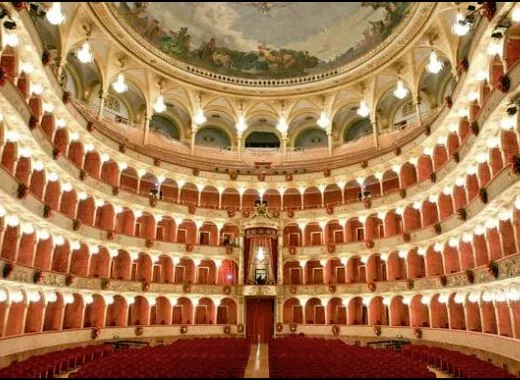
The Teatro dell'Opera, from its building (1879), at Domenico Costanzi’s request (1810-1898), and 1926, when it was bought by the then Governor of RomE, bore the name of Domenico Costanzi, building contractor and impresario, who committed the building to the Milanese architect Achille Sfondrini (1836-1900), specialized in theatre building and renovation. Built in 18 months on the area prevIously occupied by Heliogabalus’ villa, it was inaugurated on November 27th, 1880 with Semiramide by G. Rossini, conducted by the Maestro Giovanni Rossi, in the presence of the King and Queen of Italy.


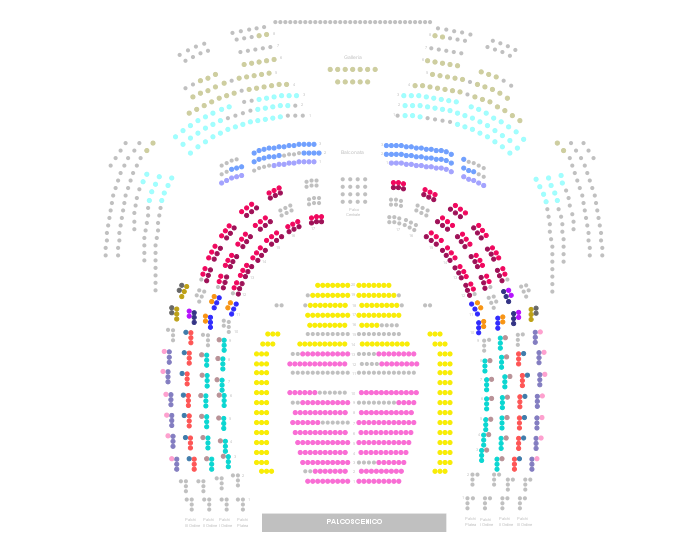
Sfrondini’s design privileges the acoustic effect, by conceiving the interior structure as a "resonance chamber": as is particularly evident from the horseshoe shape. At the beginning, the theatre, with a seating capacity of 2,212 spectators, had three tiers of boxes, an amphitheatre, a gallery. All was surmounted by a dome with splendid frescoes by Annibale Brugnoli.


Costanzi invested all his personal assets in the venture. However, due to the despotic refusal of the City Council to redeem the theatre, Costanzi was obliged to manage it himself. Despite the fact that he had to deal with huge financial problems, under his management the opera house held many world premières of such operas as Cavalleria Rusticana (on May 17th, 1890) and L'Amico Fritz(October 31st 1891), both by Pietro Mascagni, who then became very well known.


For a brief period, the theatre was managed by the founder's son, Enrico Costanzi, who contributed to other great premières: Tosca by Giacomo Puccini (January 14th, 1900) and Le Maschere (January 17th, 1901). In 1907, the Teatro Costanzi was managed by the impresario Walter Mocchi (1870-1955) on behalf of the Società Teatrale Internazionale e Nazionale (STIN).


In 1912 Emma Carelli (1877-1928), Mocchi's wife, became the managing director of the new «Impresa Costanzi», named as such following various changes in the company structure. With Rome City Council’s purchase of Costanzi company, the theatre became “Teatro Reale dell'Opera” and a partial rebuilding was commissioned to the architect Marcello Piacentini. Closed on November 15th, 1926, it was re-opened on February 27th, 1928 with the opera Nerone by Arrigo Boito, conducted by the Maestro Gino Marinuzzi.


With the advent of the Republic, the theatre gained the current name of Teatro dell'Opera. In 1958, the building was further remodeled and modernised at the request of the Rome City Council. In over a century, the Teatro dell’Opera has seen its prestige increase internationally. During the several seasons, the most acclaimed voices worldwide followed one another: Enrico Caruso; Beniamino Gigli; Aureliano Pertile; Giacomo Lauri-Volpi; Claudia Muzio; Maria Caniglia; Maria Callas; Renata Tebaldi; Montserrat Caballé; Marilyn Horne; Raina Kabaivanska; Mario Del Monaco; Franco Corelli; Giuseppe Di Stefano; Tito Gobbi; Alfredo Kraus; Ruggero Raimondi; José Carreras; Placido Domingo and Luciano Pavarotti. Among the finest conductors, we can mention Otto Klemperer, Arturo Toscanini, Victor De Sabata, Marinuzzi,Vittorio Gui, Tullio Serafin, Von Karajan, Gianandrea Gavazzeni, Carlo Maria Giulini, Georg Solti, Claudio Abbado, Georges Prêtre, Zubin Mehta, Lorin Maazel, Mstislav Rostropovich, Giuseppe Patanè, Giuseppe Sinopoli, Wolfgang Sawallisch, Nino Sanzogno, Gianluigi Gelmetti and since 2008 the Maestro Riccardo Muti.


How to reach Teatro dell'Opera

Piazza Beniamino Gigli, 7


METRO
Linea A -  REPUBBLICA TEATRO DELL'OPERA stop

BUS
Via Nazionale - H, 40, 60, 64, 70, 71, 170, 116T
Via Depretis - 70, 71
Via Cavour - 16, 75, 84, 150 (festivo), 360, 590, 649, 714
Stazione Termini - 16, 38, 75, 86, 90, 217, 310, 360, 649, 714

TAXI
phone number  - 06.3570

Hotels and Accomodation Nearby

Buy now

Gift vouchers

Gift someone an unforgettable night at the opera.
Choose a gift coupon and let them pick the performance they love—music, drama, and world-class artistry, all in one elegant experience.
Official Tickets for Rome Opera Theater, Italy, Concerts, Museums, etc.
Instagram
Payment
 
Google Play
App Store
© 2026 RM EUROPA TICKET GmbH
Whatsapp